
Home / Encapsulation
Crawl space encapsulation in Memphis and DeSoto County
Encapsulation turns a vented, dirt-floored crawl space into a sealed, dry part of the house. Done right, it is a set of jobs that work together. Done halfway, it is an expensive sheet of plastic.
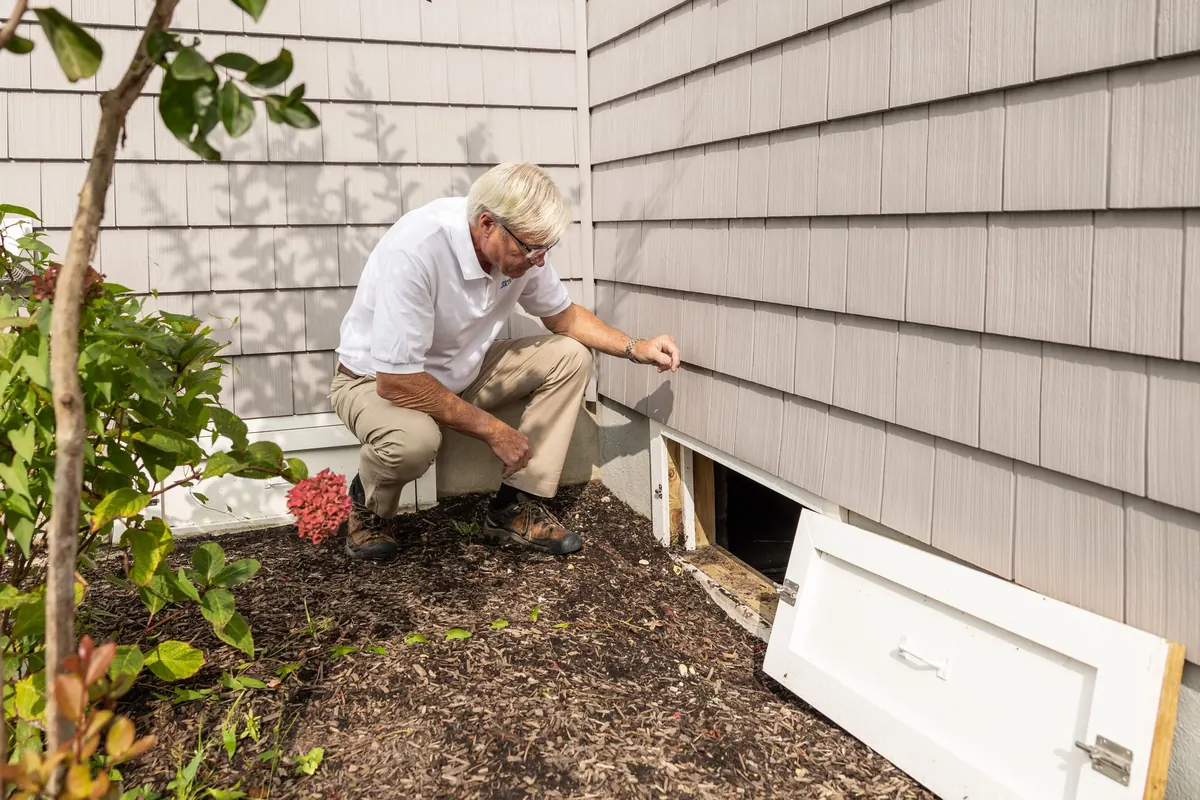
Most crawl spaces in the Memphis area were built the traditional way: block or brick foundation walls, a few vents along the sides, and bare soil underneath. The idea was that air moving through the vents would carry moisture away. In a place where summer air is hot and close to saturated, that air brings moisture in. It cools as it moves under the floor and leaves water behind on ducts, pipes, and wood. Encapsulation stops trying to ventilate the space and instead closes it off and keeps it dry.
The parts of a full system
- Fix the water first. If water runs into the crawl space after storms, that has to be handled with grading, gutters, an interior drain, or a sump before anything gets sealed. See waterproofing and drainage.
- Prepare the space. Removing debris, old torn plastic, and wet or fallen insulation, and fixing any wood damage that is already there.
- Liner on the ground. A heavy polyethylene liner laid over the soil, with seams overlapped and taped.
- Liner up the walls. Carried up the foundation walls and around piers, then fastened and sealed so ground moisture cannot get around the edges.
- Close the openings. Vents sealed, the access door insulated and weatherstripped, gaps around pipes and wires closed.
- Dry the air. Usually a crawl space dehumidifier with a drain line, or a small amount of conditioned air from the home's HVAC system. Sealing a space without any way to control humidity can leave it just as damp.
When it makes sense
Encapsulation is a strong option when the house smells musty, when there is condensation on ducts in summer, when the wood reads wet, or when you want to finish the job for good after replacing a failed vapor barrier. It is also common when ductwork runs under the floor, which is typical for many Memphis ranches and split-levels, because a dry, sealed space helps those ducts last.
When it may be too much
Some crawl spaces are already in decent shape. If the space is dry, the wood is sound, and the main problem is a torn sheet of plastic, a new, properly installed ground cover and a few repairs may be enough for now. A trustworthy contractor will tell you that. If someone pushes a full system without showing you moisture readings or photos, ask why.
Questions to ask in a Memphis quote
- What thickness and type of liner, and how far up the walls does it go?
- How are the seams and the top edge sealed and fastened?
- What happens to the vents and the access door?
- Which dehumidifier model, how is it sized, and where does it drain?
- Is any drainage work included? If not, why does this house not need it?
- Does the price include removing old insulation and debris?
- What does the warranty cover, and is it written down?
Older homes with gas appliances or a furnace in the crawl space need extra care when the space is sealed, because combustion appliances need air. Ask the contractor how they will handle that, and follow local code and the equipment maker's instructions.
For price ranges, see the cost guide. To have a contractor look at your crawl space, send a request or call (901) 000-0000.
Want a contractor to crawl under and look?
Send one short request and we will pass it to an independent crawl space contractor who covers Memphis and DeSoto County.