
Home / Vapor barriers
Crawl space vapor barriers
A vapor barrier is the plastic sheet that covers the dirt under the house. It slows the water vapor that rises out of the soil. It is one piece of moisture control, not the whole thing.
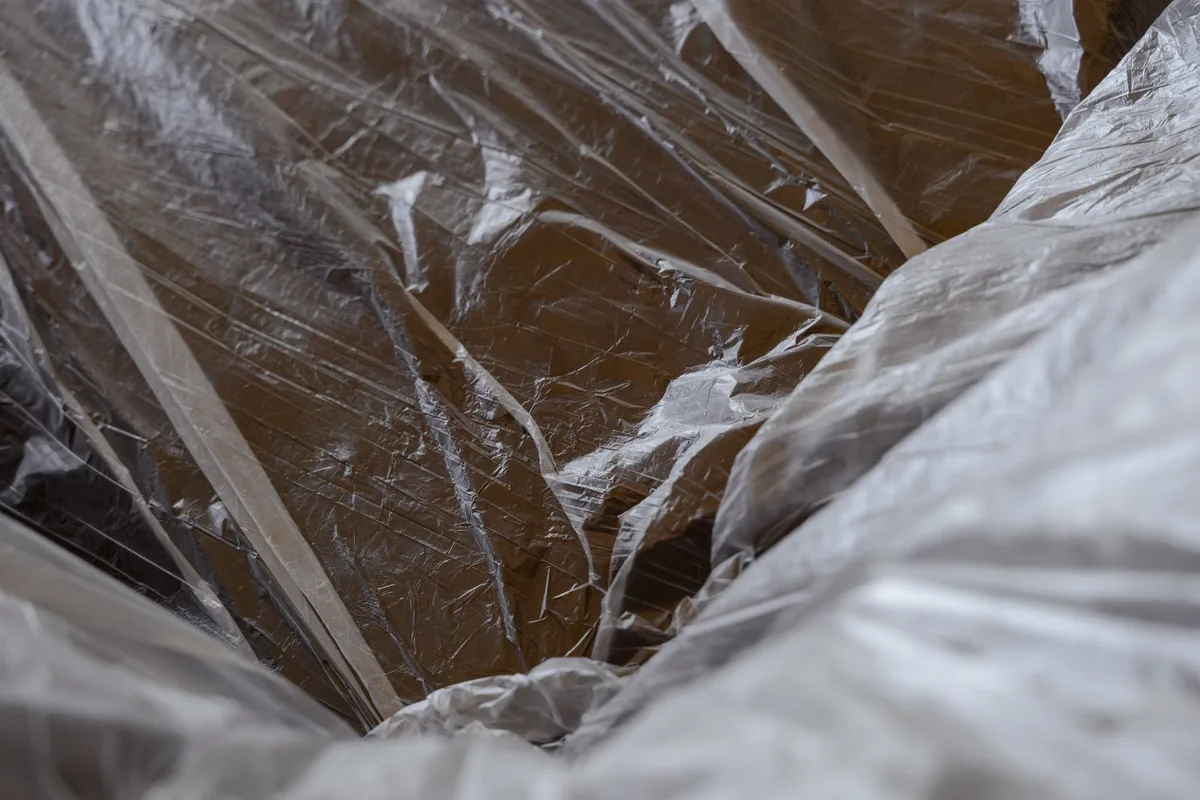
Soil under a house is almost never completely dry. Even when there is no standing water, moisture rises out of the ground as vapor and adds to the humidity under the floor. Around Memphis, where the ground is often silty clay that holds water, that steady release can be a large share of the moisture in a crawl space. Covering the soil is the simplest way to cut it down.
What you often find in older homes
Many crawl spaces have a thin sheet of plastic that was put down when the house was built or when it was last sold. Years later it is torn, bunched in corners, missing in spots where a plumber or cable installer crawled through, and loose at the edges. A sheet like that still helps a little, but water vapor comes up anywhere the soil is bare.
Ground cover, vapor barrier, encapsulation: the difference
- Basic ground cover. A sheet laid loose over the soil, with overlapping seams. Vents usually stay open.
- Sealed vapor barrier. A heavier liner with taped seams, run a short way up the walls and around piers, and fastened.
- Full encapsulation. A liner on the ground and walls, closed vents and a sealed door, plus a way to control humidity. See the encapsulation guide.
Thickness and material
Liners are sold by thickness in mils (thousandths of an inch). Thin sheets tear easily when someone crawls over them for service work. Heavier, reinforced liners hold up better to foot and knee traffic. Ask what thickness and type the contractor uses, whether it is reinforced, and how the seams are joined. Products differ, so compare the specification sheet, not only the number on the roll.
When a new vapor barrier may be enough
If the crawl space stays dry, the wood is sound, and humidity readings are reasonable, replacing a failed sheet with a properly installed, sealed liner can be a sensible, less expensive step. If you have musty smells, condensation on ducts, or wet wood, a liner alone usually will not fix that, because humid outside air is still coming in through the vents.
What to check after it is installed
- Seams overlapped generously and taped, not just laid side by side
- Liner fitted tightly around every pier, not cut short
- Edges fastened to the foundation wall where the scope calls for it
- No bare soil left in corners or under ducts
- Ask for photos if you cannot easily look yourself
Want a contractor to tell you whether your current sheet is doing its job? Send a request or call (901) 000-0000.
Want a contractor to crawl under and look?
Send one short request and we will pass it to an independent crawl space contractor who covers Memphis and DeSoto County.